
Tech is going through a massive transition right now. As pretty much every tech headline will tell you, quantum computing is officially done being just a theoretical idea. It's stepping out of the lab and turning into a real-world technology right in front of us.
To start with the basics: While normal computers work with binary bits, meaning every piece of information is either a 0 or a 1, quantum computers use qubits, and they play by entirely different rules. Because of something called superposition, qubits can actually be in multiple states at the exact same time. Add in entanglement, where qubits get linked up so that whatever happens to one instantly affects another, and things get really interesting. Basically, instead of grinding through possible solutions one by one like a normal computer, a quantum machine can look at a massive number of them all at once. For specific tasks like cryptography, heavy-duty simulations, or complex optimization problems, this is gonna speed things up immensely. It completely opens the door to solving problems that are just flat-out impossible for the computers we use today.
Last year, I randomly got into a conversation with a quantum physicist at a tech conference. It was super interesting to me, because I've never been really hit with the topic before in my circle of social life. He spoke with such a deep passion about the theoretical elegance and potential applications of quantum computing yet admitted that he had never felt more scared of the real-world impacts of his work. He said that 'when the day is ready and the first quantum computer is fully finished, I'll be prouder than anything. But that day also scares the shit out of me'. I can't even say why, but his words left a really strong impact on me, because the logical conclusion would be to just stop working on it if you fear the outcome of your work so much. But there's such an immense drive to humankind to prove fears wrong and evolve; to make tech both exciting yet unsettling. Whether it's AI, quantum computing, or bio experiments, it's so intense on how much we're playing with the "fire of innovation" every day, fully aware that every flame can either give off both light and blow things up.
People usually think "quantum advantage" just means computers doing things faster. But it's actually not just about speed, but more about solving completely different types of problems. Take Shor's algorithm, for example. It shows that a quantum machine could breeze through factoring massive numbers, which is something standard computers really struggle with. Since popular encryption systems like RSA are entirely built around how hard it is to factor those numbers, public key cryptography is in serious trouble. Then there's Grover's algorithm. It essentially supercharges unstructured searches, which puts even symmetric key encryption at risk unless we bump up some of our key sizes (AES-128) to stay safe.
We've seen a ton of progress in quantum tech over the last few years, so let's dive a bit deeper into it:
Scalability and Error Correction
There has been massive progress with quantum devices lately. They started out as basic prototypes with supporting just a handful of qubits, and now we're looking at systems packing dozens or even hundreds of them. Still, actually scaling these things up into full-blown quantum computers is a massive challenge. The main villains here are noise and decoherence – so basically, outside interference that easily messes up the incredibly fragile quantum states these machines need to work.
To get around this, researchers are leaning hard into quantum error correction (QEC). We're talking about concepts like surface codes, topological qubits and bosonic error-protected qubits. The whole idea is to build enough redundancy and fault tolerance into the architecture to keep the "logical qubits" stable, even when errors inevitably pop up.
We don't have fully error-corrected, large-scale quantum computers up and running just yet. But given how fast things have moved over the last few years, most experts believe we could actually have operational systems working in the next decade.
Standardizing Post-Quantum Cryptography
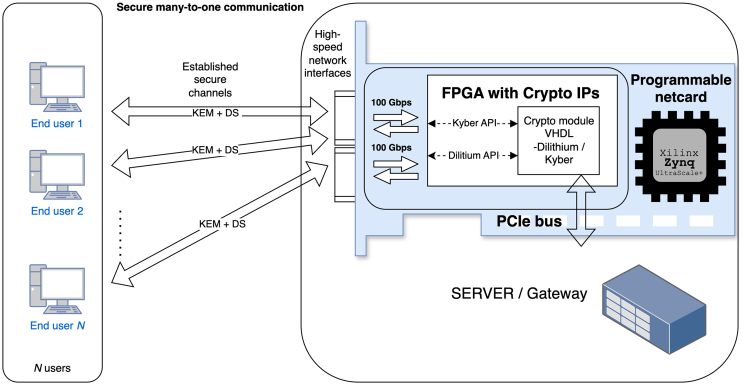
The NIST (National Institute of Standards and Technology) knows exactly what quantum computing could potentially mean for our digital security. That's why they've spent the last few years testing out new cryptographic methods that can actually survive future quantum attacks.
After a long process, they've finally picked a new batch of post-quantum algorithms. This includes lattice-based systems like Kyber for encryption and Dilithium for digital signatures. The concept behind them is pretty straightforward: they rely on math problems that are so ridiculously hard, even a massive quantum computer shouldn't be able to crack them.
By making these the new standard, NIST has basically kicked off a global push toward quantum-proof security. This is just the beginning of a huge transition. Over time, governments, tech companies and infrastructure providers are all going to have to update their systems, protocols and software. It's a massive undertaking, but it's the only way to make sure the internet stays safe in a future where quantum computers could easily rip through the encryption we use today.
Impact on Datacenters and Security Infrastructure
The whole setup of today's data centers and cloud networks is basically built on security assumptions that quantum computers are going to tear apart. Right now, everyday protocols like TLS, VPNs, SSH, and PKI only work because certain math problems like discrete logarithms and prime factorization are incredibly hard for standard computers to solve. But once a quantum computer gets powerful enough, it could crack those problems wide open, pretty much making all our current security protocols completely useless.
The Imperative for Migration to Post-Quantum Cryptography
Moving to quantum-resistant systems isn't just a matter of pushing a quick software update, it takes a big mountain of prep work. We're talking about reissuing certificates, completely overhauling key management setups and updating crypto libraries across web servers, databases, and operating systems. On top of that, you have to make sure everything still plays nice with older legacy systems, all while running rigorous tests so you don't accidentally open up new security holes.
To actually stay protected, DCs need to get serious about "crypto-agility". This basically means the ability to juggle multiple algorithms and swap them out seamlessly as standards change. Right now, the industry is looking into hybrid setups that mix classic encryption with post-quantum methods. This keeps older systems working while future-proofing the core protocols. But if we're being honest, actually pulling this off is tough. Budgets, resources and know-how are always tight. This is especially true for smaller infrastructures that are currently swamped just trying to comply with new regulations like NIS2, the CER Directive and many more.
Sure, the big guys like Google, AWS and Azure are already playing around with experimental quantum-safe options, but the average data center is gonna hit some serious roadblocks. Real expertise in PQC (Post-Quantum Cryptography) is still incredibly rare, resources for massive migrations are limited and putting out daily operational fires usually pushes long-term crypto planning straight to the back. Because of all this, it's natural we aren't going to see some overnight, universal overhaul. Instead, the transition is going to happen in phases; driven by risk assessments, regulatory pressure and whatever the vendors actually end up supporting.
All of this doesn't mean that quantum computers don't exist yet though, they're already here, even if their capabilities are still somewhat limited. People are building specialized facilities all over the world just to house them. Take IBM's Quantum Data Center in Ehningen, Germany for example. They've got advanced quantum processors hooked up directly to the cloud. Right now, companies and research teams are using them for things like simulating molecular structures, testing out optimization algorithms, and dabbling in early quantum machine learning and cryptography. Because IBM offers access to actual hardware instead of just software simulators, users get to mess around with real quantum behavior and start figuring out practical use cases.
Then there's the Qilimanjaro Quantum Hub in Barcelona. It's a "multimodal" facility, which basically means they run different types of quantum hardware right alongside traditional high-performance supercomputers. They're already pushing hybrid workflows; teaming up quantum hardware with classical tech to solve heavy-duty problems in materials science, chemistry, industrial optimization and AI training. It's a great sneak peek into how future data centers will mix and match different technologies depending on the job.
You've also got places like IonQ's research setups in Basel, Switzerland and their upcoming sites in Amaravati, India. The whole point there is to get researchers and developers hands-on with quantum machines as early as possible. This lets them build algorithms, test out ideas, and figure out how to deal with the unique, weird quirks of running quantum hardware.
Let's be real though: today's quantum computers are incredibly fussy. They need ultra-low temperatures, rock-solid infrastructure, and zero outside interference. So no, they are not gonna replace your standard classical servers for everyday workloads anytime soon. Instead, these early quantum data centers act more like futuristic labs. They give businesses and data center operators a sandbox to test out software, explore those hybrid workflows, and build up the know-how we'll need when the really powerful systems finally drop.
This is exactly why "regular" data centers need to start gearing up right now. They have to get ready for hybrid workloads, figure out how to provide the crazy environmental stability these machines need, and lock down future-proof security. Operators can start right now by understanding exactly where the most valuable data lives, testing out some hybrid PQC setups and updating certs and keys for critical services. Tackling these things early buys some much-needed breathing room and makes the bigger migration down the road a whole lot easier. If they adapt early, they'll be perfectly positioned to jump on the first commercial quantum apps. The DCs that figure this out today are going to have a massive competitive edge when clients start looking for combined classical-quantum solutions down the road.
Risks Beyond Encryption through Q-Day: Harvest now, decrypt later
The real danger isn't just future cyberattacks or waiting around for quantum tech to finally break through. One of the biggest worries right now is the "harvest now, decrypt later" tactic. Basically, hackers are already scooping up encrypted data today and just sitting on it, waiting for quantum computers to get strong enough to unlock it. There's actually an industry term for this: "Q-Day" – the exact moment quantum tech makes this possible.
This is a massive hassle for anything that needs to stay secret for a long time, like financial records, legal documents or classified government comms. So, even though nobody actually has a quantum computer that can break public-key encryption yet, just knowing they're on the way is already forcing everyone to rethink their security strategies today. Companies love to brag about their AES-256 encryption. What they're ignoring is that hackers are stealing their data anyway and just waiting another 7 years for the first quantum computer to crack it. But who's actually liable for a data breach that happens today, but is only read in 2032?
Blockchain Vulnerabilities – Strategic and Ethical Dimensions
Think about blockchain and distributed ledger technologies, most of them rely heavily on elliptic curve digital signatures. If a quantum computer gets powerful enough, it could essentially calculate private keys just from looking at public addresses, which would completely break the integrity of these systems. Because of this, developers are already pushing for quantum-resistant blockchain designs, swapping out those vulnerable setups for PQC (post-quantum cryptography) alternatives.
But this isn't just a technical headache; it's evolved into a massive geopolitical race and a strategic national priority. Governments everywhere are pouring serious money into this. China, for instance, has explicitly made quantum tech a core pillar of its strategy for future competitiveness. Over in Europe, the EU is baking quantum readiness right into its digital infrastructure goals, pushing hard for the widespread rollout of quantum-safe protocols by 2030. The US is doing something similar, weaving PQC migration into its federal cybersecurity strategy and funding massive research and public-private partnerships. The underlying message here is clear: everyone realizes that whoever takes the lead in quantum computing is going to have a massive upper hand when it comes to intelligence, defense, secure communications, and global economic influence.
Beyond the geopolitical chess game, this massive leap in computing power brings up some really tough societal and ethical questions about privacy and the foundation of our digital trust. The real issue is that if the data we encrypt today can simply be decrypted a few years down the line, our long-term privacy guarantees essentially fall apart. Because of that, we have to completely rethink the trust models we use for things like digital identities, voting, healthcare records, and finance. At the same time though, this shift is kicking off a whole new economic ecosystem. We're seeing a boom in industries built around quantum security like quantum-safe software libraries, cryptographic auditing, consulting and hybrid crypto environments. Businesses that get ahead of the curve and adopt quantum-ready frameworks early are going to have a serious competitive edge. On the flip side, those who drag their feet are looking at a future full of data exposure, regulatory nightmares and a total loss of consumer trust.
Technical and Operational Hurdles
Actually getting ready for the quantum era comes with some serious technical hurdles. Take error tolerance, for example: today's qubits are highly sensitive to environmental noise, meaning we need a very tight co-design of hardware and software just to keep quantum computations reliable. Then there's the sheer scale of ecosystem integration. Rolling out quantum-safe cryptography isn't a simple plug-and-play fix; it has to be deeply embedded across hardware, operating systems, middleware, and the application layer; all without dragging down performance or breaking compatibility.
Ultimately, quantum computing is forcing us to completely rethink the fundamentals of cybersecurity. Yes, it's exciting: the ability to solve problems that are currently impossible will be a massive gamechanger for fields like optimization and material simulation. But at the exact same time, it directly threatens the cryptographic foundations that keep our digital world running. DCs, cloud platforms and enterprise IT teams are caught in a highly complex balancing act, trying to manage rapid technological evolution, limited resources and a very real sense of urgency. And the discussion goes beyond just securing data; it also touches on the broader ethical and societal frameworks that dictate how we protect information in the first place.
At the end of the day, quantum computing isn't just the next step in IT. It's a transformational shift that is completely reshaping how we view security, trust and computational power. This is exactly why you see so many experts caught in a paradox of being highly excited but also extremely cautious. Like any massive leap in capability, it has the potential to either drive incredible progress or completely disrupt our digital infrastructure, depending entirely on how carefully we manage the transition. This technology can either light the way forward or burn everything down, depending entirely on how it is handled.
References and sources
National Institute of Standards and Technology. (2024). Post-Quantum Cryptography Standardization Project. https://csrc.nist.gov/projects/post-quantum-cryptography/post-quantum-cryptography-standardization
Cloudflare, Inc. (2019). The TLS Post-Quantum Experiment. https://blog.cloudflare.com/the-tls-post-quantum-experiment/
Cloudflare, Inc. (2023). Post-Quantum Cryptography. https://developers.cloudflare.com/ssl/post-quantum-cryptography/
European Commission. (2025). Coordinated implementation roadmap for the transition to post-quantum cryptography. https://digital-strategy.ec.europa.eu/en/library/coordinated-implementation-roadmap-transition-post-quantum-cryptography
European Union Agency for Cybersecurity. (2021). Algorithms, standards and protocols for post-quantum cryptography. https://www.enisa.europa.eu/publications/algorithms-standards-and-protocols-for-post-quantum-cryptography
National Institute of Standards and Technology. (2023). Migration to post-quantum cryptography. https://pages.nist.gov/nccoe-migration-post-quantum-cryptography/
Alagic, G., et al. (2020). Status report on the second round of the NIST post-quantum cryptography standardization process. https://doi.org/10.6028/NIST.IR.8309
Chen, L., et al. (2016). Report on post-quantum cryptography. https://doi.org/10.6028/NIST.IR.8105
Arute, F., et al. (2019). Quantum supremacy using a programmable superconducting processor. Nature, 574, 505–510. https://doi.org/10.1038/s41586-019-1666-5
Bernstein, D. J., & Lange, T. (2017). Post-quantum cryptography. Nature, 549, 188–194. https://doi.org/10.1038/nature23461
Buchanan, W., et al. (2024). Efficient unified architecture for post-quantum cryptography: Combining Dilithium and Kyber. PeerJ Computer Science. https://peerj.com/articles/cs-2746/
DataBank. (2024). Quantum computing and its potential disruption to data centers. https://www.databank.com/resources/blogs/quantum-computing-and-its-potential-disruption-to-data-centers/